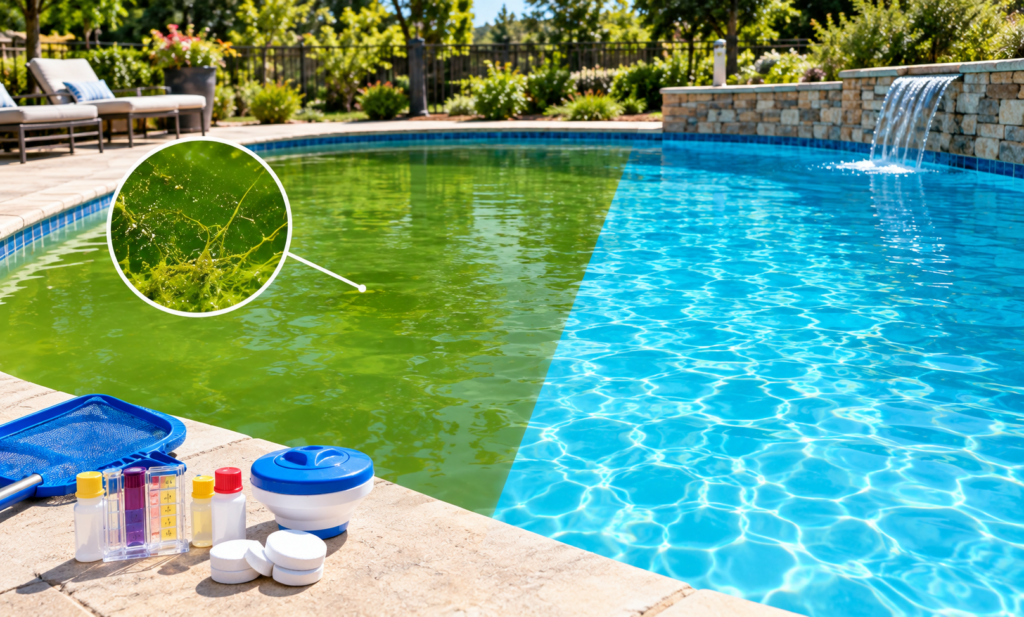
If you’re wondering, “Why is my pool green?” the most common reason is algae growth caused by low chlorine levels, poor circulation, or inadequate filtration. However, green pool water can also result from imbalanced water chemistry, metals such as copper, or pollen and other debris. The fastest way to identify the problem is to test your pool water, correct the underlying cause, and follow a safe green pool cleaning and filtration process.
A green swimming pool doesn’t always mean you need to drain and refill it. Many pools can be restored with the right chemical treatment, thorough brushing, and proper filtration. Here’s how to identify the cause, fix the problem, and prevent green water from returning.
Pool water usually turns green when algae multiply faster than the pool’s chlorine sanitizer and filtration system can control them. Warm weather, heavy pool use, rain, debris, and poor water circulation can all contribute to an algae bloom.
Other possible causes include:
Low chlorine: Not enough free chlorine is available to control algae and contaminants.
Unbalanced pH: High pH can reduce chlorine’s effectiveness.
Poor filtration: A dirty or clogged filter may struggle to remove algae and debris.
High cyanuric acid (CYA): Excessive stabilizer can interfere with effective chlorine sanitation.
Metals in the water: Dissolved copper or iron can cause green or greenish discoloration.
Pollen and organic debris: Seasonal contaminants may affect water appearance.
Identifying the correct cause matters because treating algae is different from treating metal-related discoloration.
Green water rarely has just one cause. Several small problems often stack up, especially during hot weather, heavy rain, or busy swim weeks.
Chlorine is your main defense against algae and bacteria. When free chlorine drops too low, algae spores that are always present in a swimming pool can multiply quickly. Sunlight, heavy bather loads, rain, and debris all use up chlorine faster than you might expect.
What to do: Test free chlorine and pH with a reliable pool test kit. If chlorine is low, determine whether an appropriate chlorine treatment is needed based on your pool’s test results, stabilizer level, and product instructions.
An algae bloom is the direct result of unchecked algae growth. Green algae is the most common type and usually turns water light green to dark swamp green. Other types exist too:
What to do: Brush affected surfaces, test and balance the water, and use an appropriate pool algae treatment. Persistent mustard or black algae may require a more specialized approach.
When pH drifts too high, chlorine becomes less effective at sanitizing, even if the chlorine level looks acceptable on paper. That gives algae an opening. Poor pool water chemistry in general is one of the most overlooked reasons pools go green.
What to do: Test pH before adding treatment chemicals. Adjust it according to your pool’s test results and the chemical manufacturer’s directions. Retest after adjustments rather than assuming the water is balanced.
Cyanuric acid, also called pool stabilizer, protects chlorine from being burned off by sunlight. But too much CYA can weaken chlorine’s ability to sanitize. Many pool owners build up high CYA levels over time by using stabilized chlorine products without testing.
What to do: Test CYA levels alongside free chlorine. If stabilizer is excessive, determine the appropriate correction based on your pool system and test results. Avoid repeatedly adding stabilized chlorine products without understanding the current CYA level.
Phosphates are a food source for algae. They come from fertilizer, leaves, rain runoff, and some source water. High phosphates alone don’t turn a pool green, but they can make algae easier to grow and harder to control.
What to do: First, address chlorine levels, water balance, and filtration. Consider phosphate testing if algae repeatedly return despite maintaining proper sanitation.
A dirty or clogged pool filter can’t remove algae and fine debris from the water. If your filter pressure is high, flow seems weak, or you haven’t cleaned the filter in a long time, it may be part of the problem.
What to do: Inspect skimmer and pump baskets, check the filter pressure against its normal operating range, and clean or backwash the filter according to the manufacturer’s instructions. If circulation remains weak, have the pump and plumbing checked.
Still water is an invitation for algae. Short pump runtime, blocked skimmers, closed valves, or dead spots near corners and steps can leave areas where chlorine doesn’t reach. Good circulation keeps sanitizer evenly distributed.
Heavy pollen can coat the surface with a yellow-green film and clog the filter. It also consumes chlorine. Leaves, grass, and dust add contaminants that feed algae and reduce water clarity.
What to do: Skim the surface, remove debris from baskets, and maintain proper filtration. If the water remains green, test the chemistry instead of assuming pollen is the only problem.
Before adding any chemicals, test. Guessing is how pool owners waste money and sometimes make things worse.
Check these basics with a reliable test kit or a professional water test:
Use these observations as a starting point:
| What You Notice | Possible Cause | Recommended Next Step |
|---|---|---|
| Green, cloudy water | Algae growth | Test chlorine and pH; inspect filtration |
| Slippery pool walls | Algae buildup | Brush surfaces and review sanitation |
| Clear green water | Dissolved metals | Test for copper and iron |
| Green water after heavy rain | Low chlorine, debris, or dilution | Test chemistry and remove debris |
| Green water after shocking | Persistent algae, poor filtration, or metals | Retest water and investigate the cause |
| Recurring algae | Inconsistent sanitation, circulation issues, or high CYA | Review water chemistry and equipment |
Important: Never rely on water color alone to diagnose the problem. Water testing provides a more reliable basis for treatment.
There is no instant fix, and the exact timeline depends on how severe the algae bloom is. Follow these steps in order for the safest, most reliable results.
Safety first: Wear gloves and eye protection, never mix pool chemicals together, add chemicals to water (never water to chemicals), and keep everyone out of the pool during treatment. Always read and follow the product label.
Take out leaves, bugs, and other debris by hand or with a net. Empty the skimmer and pump baskets so water can flow freely.
Brush pool walls, floor, steps, and corners thoroughly. This breaks up algae so your chemicals can reach it. Don’t skip this step, even when the water looks mostly clear.
Test and record your starting numbers: free chlorine, pH, alkalinity, and CYA at minimum. These readings tell you what to adjust.
Adjust pH and alkalinity first, since chlorine works better when the water is balanced. If CYA is very high, partial draining and refilling with fresh water may be the only way to bring it down.
Shocking raises free chlorine well above normal to kill algae and oxidize contaminants. The amount you need depends on your pool size, your current test results, and the product instructions. Many pool owners shock in the evening so sunlight doesn’t burn off the chlorine, but always follow the label for your specific product.
Run the pump continuously during treatment so the shock circulates.
Keep the pump running and check the filter often. A heavy bloom can clog it quickly. Depending on your system:
Regular pool filter cleaning during a cleanup is essential, not optional.
Once the water turns from green to gray or cloudy, the algae are dying. Vacuum dead algae to waste if your system allows it, so you’re not recirculating debris through the filter. Brush again as needed.
Test again after treatment. Confirm that free chlorine holds steady overnight and that pH is back in range. Stubborn blooms may need another round of treatment. An algaecide can be used as a supporting tool, but it works best alongside proper chlorine levels, not instead of them.
Don’t swim until the water is clear and your test results show chlorine and pH are within safe swimming ranges.
If your pool is still green after shocking it, adding more chlorine without investigating the cause may waste chemicals and delay recovery.
Common reasons include:
High CYA: Stabilizer levels may be affecting the chlorine level needed for effective treatment.
Poor filtration: Dead algae and suspended particles may remain in the water.
Inadequate circulation: Some areas may not receive enough treated water.
Incorrect water balance: pH and other chemistry conditions may need correction.
Metal oxidation: Copper or other metals may be causing the discoloration.
Persistent algae: Heavy growth or resistant algae may require additional brushing and a different treatment strategy.
Retest the water, inspect the filtration system, and confirm the original diagnosis before repeating a shock treatment. Understanding how often should you clean your pool is important because consistent brushing, skimming, and filter cleaning help prevent algae from returning after treatment.
Call a pool professional if:
If your pool remains cloudy or green despite repeated treatments, professional green pool cleanup services can help identify the underlying problem and restore your pool water.
A few simple habits make a big difference. These pool maintenance tips help keep your swimming pool a healthy swimming environment all season:
Keeping track of routine cleaning tasks with a practical pool maintenance checklist can help prevent debris buildup and reduce the risk of recurring algae problems.
Professional chemical balancing through expert weekly pool maintenance can help prevent algae buildup and keep your pool water clear throughout the swimming season.
No. Green water can indicate algae and, sometimes, bacteria or other contaminants. Algae itself isn’t always harmful, but the conditions that cause it can allow harmful germs to thrive. Wait until the water is clear and tested within safe ranges.
It depends on how bad the bloom is, your filter’s condition, and your water chemistry. Light blooms may improve within days, while severe ones can take longer. No one can promise an exact timeline.
Sometimes shock alone helps with a mild problem, but it often isn’t enough. If pH is off, CYA is too high, or the filter is clogged, shock won’t work as well. Balance, brushing, and filtration all matter.
Common reasons include not enough chlorine for the amount of algae, high CYA, poor circulation, a dirty filter, or not brushing. It could also be metals rather than algae. Retest your water and review each step.
Indirectly, yes. High pH lowers chlorine’s effectiveness, which makes it easier for algae to grow. Keeping pH balanced helps your chlorine do its job.
Pollen can give water a yellow-green cast and clog your filter. It also uses up chlorine, which can set the stage for algae. Skimming and filter cleaning help.
Usually not. Most green pools can be treated with proper chemistry and filtration. Partial draining may be needed if CYA or other levels are extremely high. A pool professional can advise you.
If you’re asking why your pool is green, the answer is usually low chlorine and algae growth, often made worse by poor water balance, high CYA, weak circulation, or a dirty filter. The safest path is to test first, correct the underlying issue, shock based on your pool’s needs, clean the filter, and retest.
With consistent testing and regular maintenance, any pool owner can keep water clear and inviting. And if you ever feel stuck, for reliable pool care, cleaning, and restoration support, Pool Master offers professional solutions to help keep your swimming pool clean, clear, and ready to enjoy.
Keep your pool in peak condition with trusted pool care from Pool Masters. Whether you need routine maintenance, equipment repairs, filter cleaning, or a complete pool restoration, our experienced team is here to help. Contact us today to request a free quote or schedule service in Norco.
(951) 741-1417
info@poolmastertoday.com